
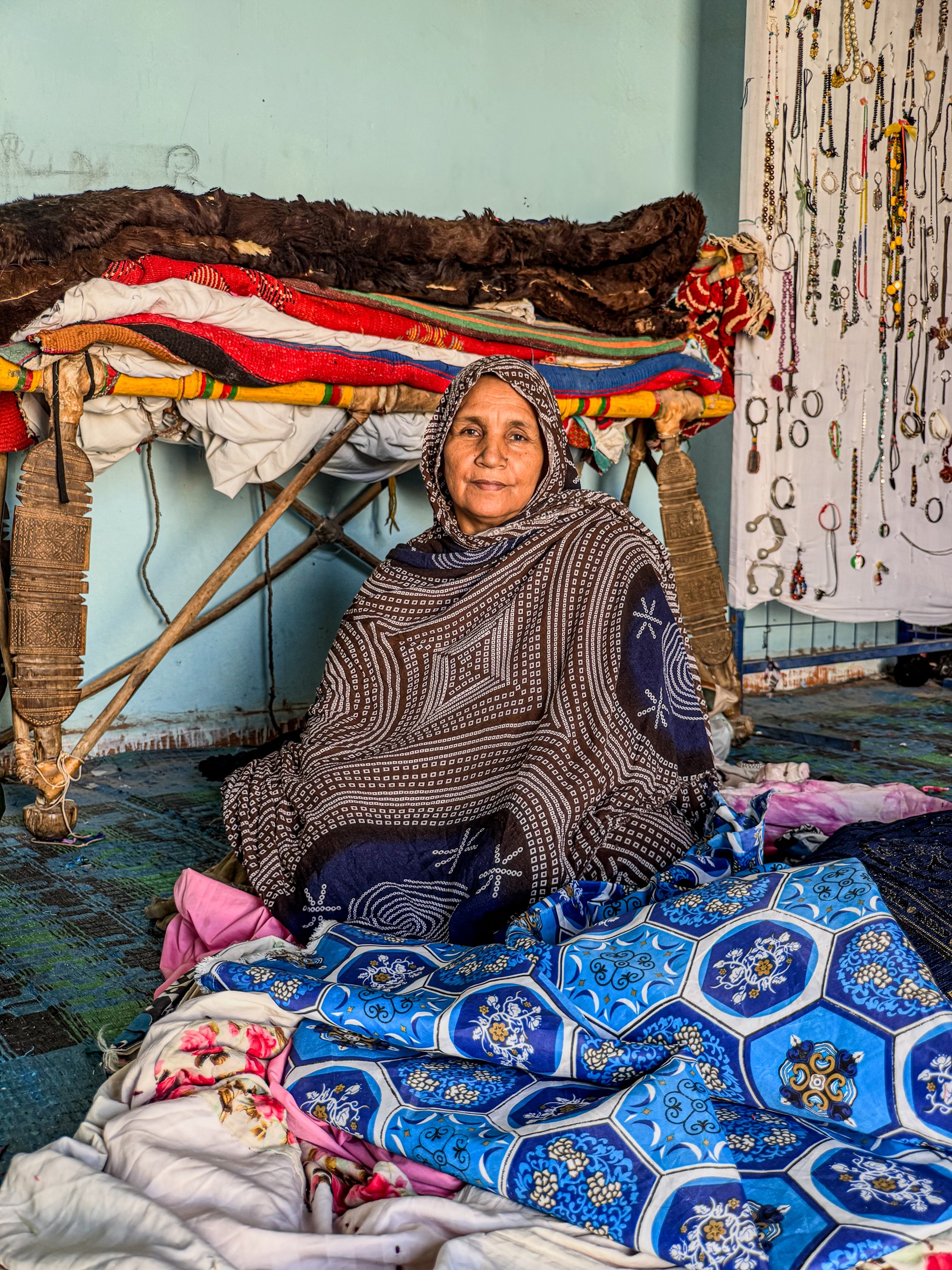
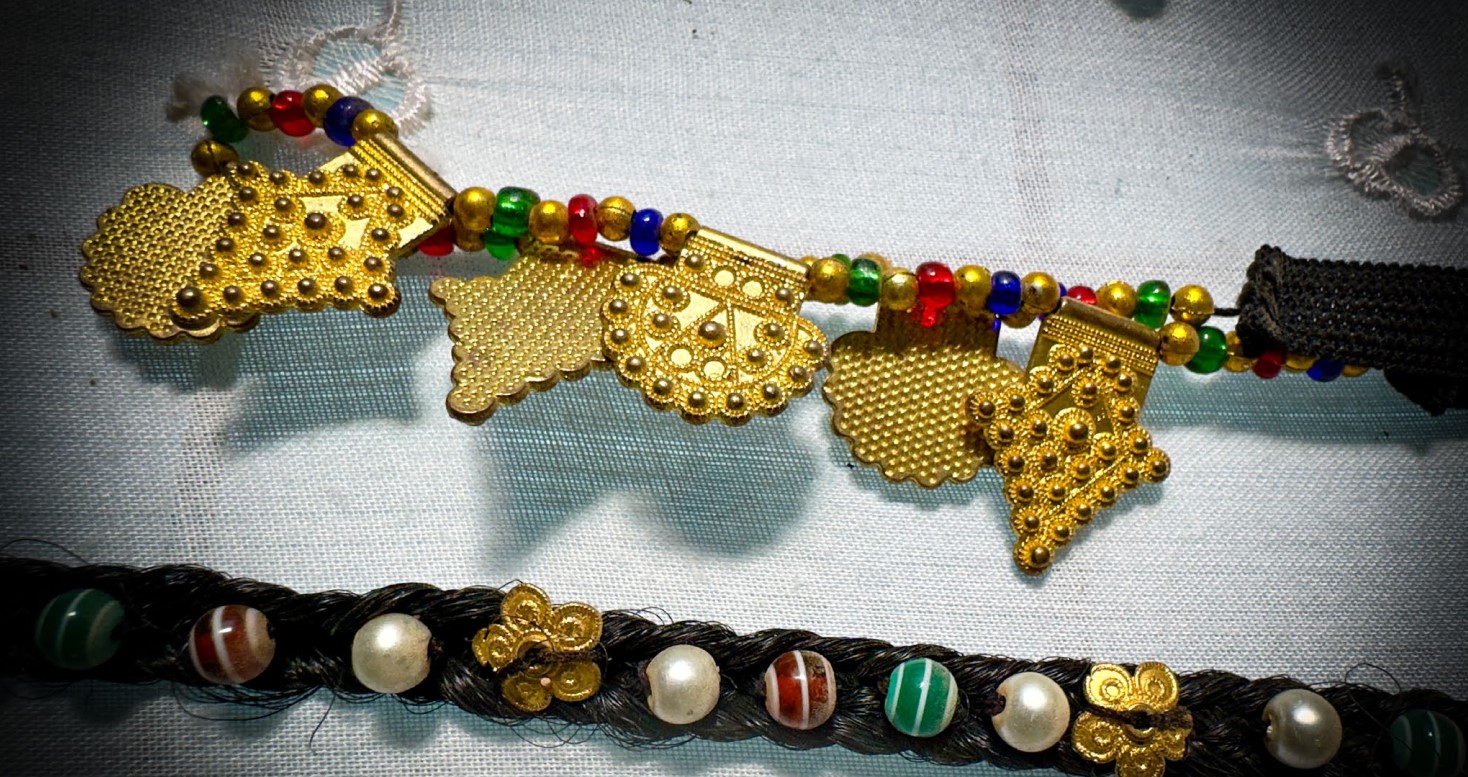
In her modest shop, the carpets speak the language of the ancestors, the jewelry tells the stories of the hands that polished them, and the traditional dresses still dance to the sound of memories.
But Salamha doesn’t just sell objects - she sells fragments of the Sahrawi soul.
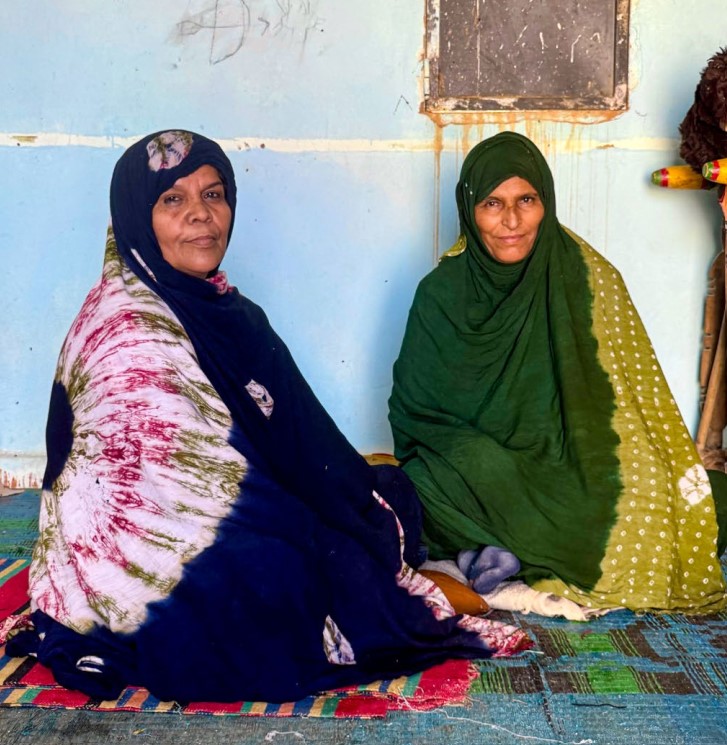
Having learned the art of weaving in 1980, passed down by the elders, she has become the silent guardian of a threatened heritage. Today, with her friends, she makes it her duty to transmit this knowledge as one would pass on a precious secret:
a stitch of a carpet here, an embroidery motif there, the mystery of a traditional necklace elsewhere.
«There is everything here to make a woman happy»
she confides in me, her smile illuminating the narrow space.
But her own happiness lies in this obstinate transmission.
When her skilled fingers work the loom, it’s not just wool she intertwines - it’s the memory of an entire people that she weaves. Each pattern is a love letter to a culture that refuses to disappear.
Her generosity overwhelmed me. Insisting on giving me one of her treasures, with the certainty that refusing would be to deny the value of her gesture.
In her eyes, I saw the sacred urgency of transmission shining:
«Our culture is our identity, and our identity must survive»
Our Role in This Reality:
By supporting Salamha and the Sahrawi artisans, you are not simply buying a carpet or a piece of jewelry.
You are participating in the preservation of a threatened heritage; you are allowing a millennial culture to continue living through the hands of new generations.
Every purchase becomes an act of cultural affirmation.